
Benefits of TMS & Esketamine Therapy for Mental Health Recovery
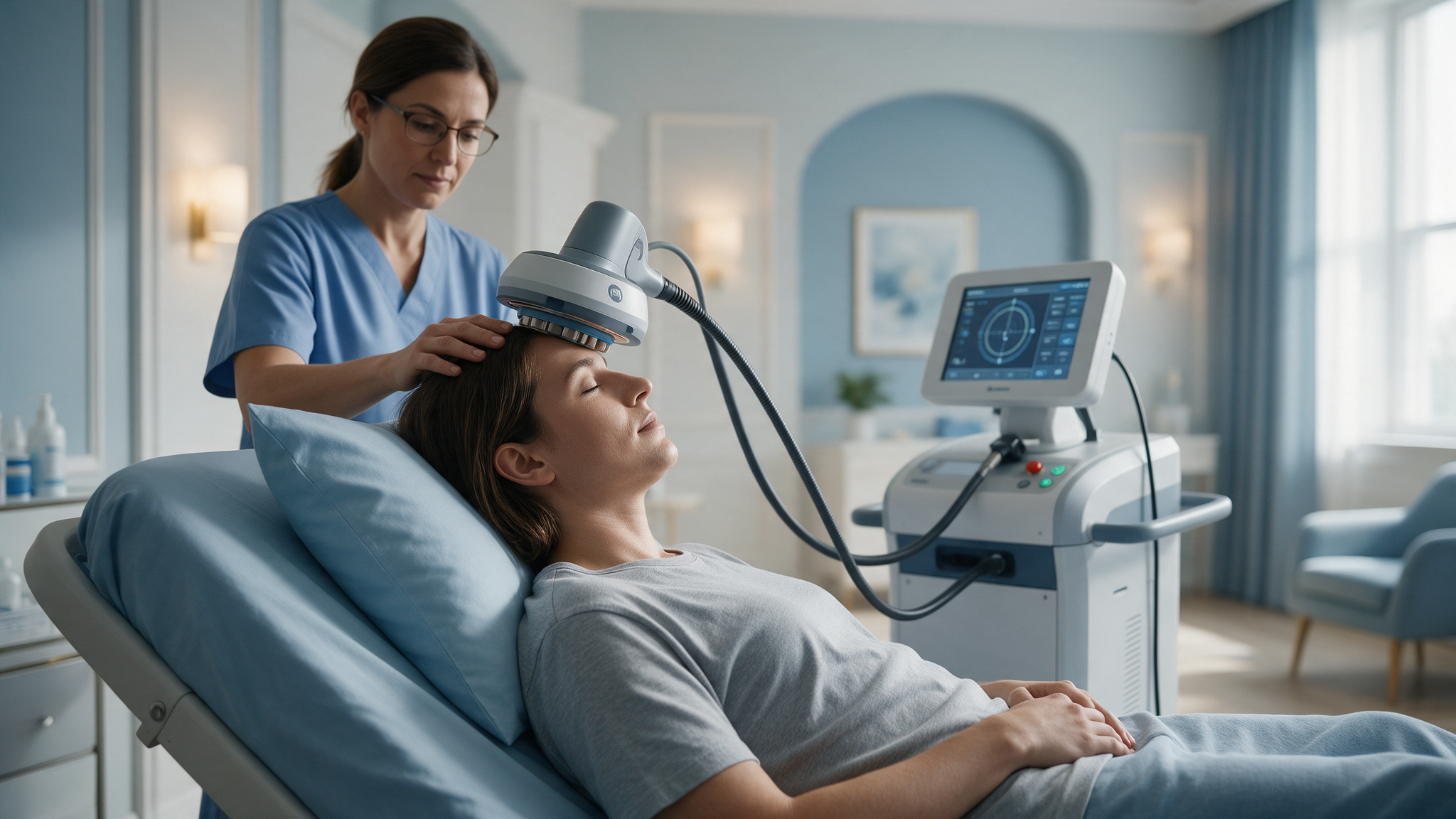
What are TMS and Esketamine?
Transcranial Magnetic Stimulation (TMS) is a non-invasive treatment that uses magnetic pulses to stimulate mood-regulating brain regions. No surgery or anesthesia is required, and patients can usually resume normal activities right after.
Esketamine (Spravato) is a prescription nasal spray administered under medical supervision. It targets the glutamate system and is FDA-approved for treatment-resistant depression and for major depressive disorder with acute suicidal ideation. Patients are monitored for at least two hours and cannot drive until the next day after restful sleep.
Key Benefits for Recovery
1. Additional options for treatment-resistant depression
When multiple antidepressants haven't provided adequate relief, TMS and Esketamine offer evidence-based alternatives with different mechanisms of action.
2. Targeted approaches
TMS modulates brain circuits involved in mood; Esketamine acts on glutamate pathways linked to neuroplasticity. These distinct mechanisms can benefit patients who haven't responded to standard treatments.
3. Potential for faster improvement
Some patients experience improvement with Esketamine within hours or days. TMS typically requires several weeks of repeated sessions. Response varies — not everyone benefits.
4. Personalized & holistic care
Both treatments can be integrated with psychiatric care, psychotherapy, sleep support, nutrition, and stress management for a comprehensive plan.
5. Improved daily functioning
When symptoms ease, patients often see better concentration, motivation, sleep, and engagement in daily life. Ongoing care may be needed to maintain gains.
Who may be a candidate?
TMS and Esketamine are considered for adults with major depressive disorder who meet specific clinical criteria. You may be a candidate if you:
- Have not improved sufficiently with antidepressants
- Continue to experience significant depressive symptoms
- Have been diagnosed with treatment-resistant depression
- Need additional options after psychiatric evaluation
Note: These treatments are not automatically approved for anxiety or PTSD, though those conditions may coexist with depression.
TMS vs. Esketamine at a glance
| Feature | TMS | Esketamine |
|---|---|---|
| Method | Magnetic brain stimulation | Nasal spray (supervised) |
| Anesthesia | Not required | Not required |
| Monitoring | During treatment | At least 2 hours after |
| Driving afterward | Usually permitted | Restricted until next day |
| Common side effects | Scalp discomfort, headache | Dizziness, dissociation, nausea |
TMS carries an uncommon risk of seizures. Esketamine has warnings regarding sedation, dissociation, and respiratory depression. Neither is universally better — the right choice depends on individual clinical factors.
What to expect
- Step 1 – Assessment: Psychiatric evaluation of symptoms, history, and health.
- Step 2 – Personalized plan: Discussion of benefits, risks, and schedule.
- Step 3 – Sessions: TMS (awake, non-invasive) or Esketamine (supervised nasal spray + observation).
- Step 4 – Monitoring: Tracking symptoms, side effects, and response.
- Step 5 – Follow-up: Adjustments and ongoing care as needed.
Frequently asked questions
Conclusion
TMS and Esketamine offer valuable additional pathways for people with persistent or treatment-resistant depression. When combined with individualized psychiatric care and holistic lifestyle support, they can become part of a comprehensive mental wellness plan.
Take the next step
If depression symptoms continue despite previous treatment, a professional evaluation can help identify appropriate options.
Texas Holistic Psychiatry — personalized mental health care in Kingwood and greater Houston.
Explore your options →