
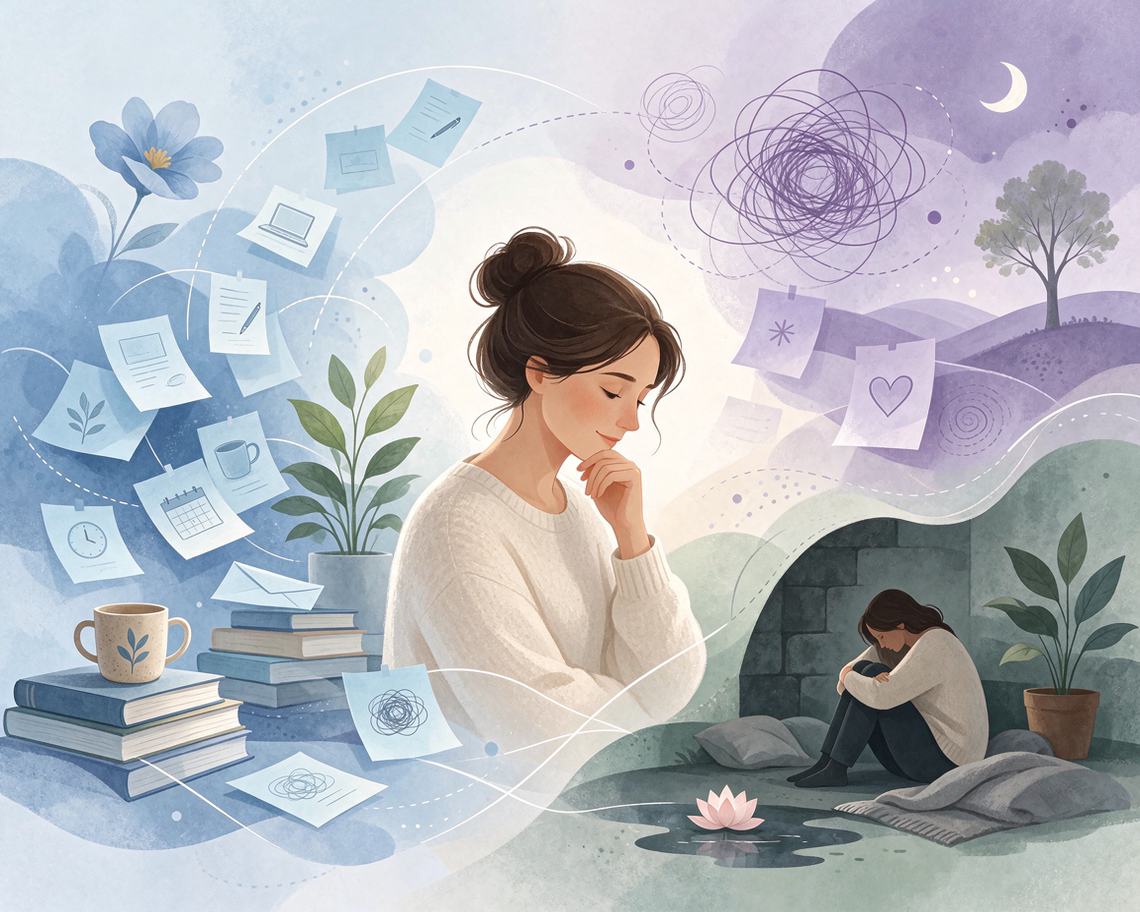
ADHD Symptoms in Women: 10 Overlooked Signs and a Helpful Guide for 2026
What Is ADHD in Adult Women?
Attention-deficit/hyperactivity disorder (ADHD) is a neurodevelopmental condition. It affects attention, organization, impulse control, and emotional regulation. It begins in childhood, but it does not disappear when a person turns 18.
Many women are not identified until adulthood. Often it happens after a child is diagnosed, during a career change, or when life demands outgrow the coping strategies that once worked.
ADHD generally presents in three ways:
- Inattentive: trouble focusing, forgetfulness, disorganization
- Hyperactive-impulsive: restlessness, interrupting, acting without thinking
- Combined: features of both
Women are often described as having the inattentive presentation, which is quieter and easier to miss.
Why Are ADHD Symptoms in Women Often Overlooked?
Several factors can hide ADHD in women and girls:
- Quieter symptoms: Daydreaming and disorganization draw less attention than disruptive behavior.
- Masking: Many women work very hard to appear organized and “fine,” often at great personal cost.
- Social expectations: Women are often expected to manage households, schedules, and relationships smoothly.
- Misdiagnosis: Struggles may be labeled as anxiety, depression, or stress, while the underlying ADHD goes unrecognized.
- Hormonal changes: Shifts across the menstrual cycle, pregnancy, and perimenopause may change how symptoms feel, which can add to the confusion.
None of this means you are lazy or not trying hard enough. It means the picture of ADHD many of us grew up with was incomplete.
10 Common ADHD Symptoms in Women
Everyone experiences some of these now and then. What matters is how long they have been present, how often they occur, and how much they interfere with daily life.
Chronic Disorganization
Clutter, lost items, and missed deadlines may continue despite planners, apps, and constant effort.
Difficulty Sustaining Focus
You may start tasks with good intentions but drift away from them. Reading or paperwork can feel unusually draining.
Time Blindness
Estimating how long things take can feel nearly impossible. Running late or underestimating tasks becomes a regular pattern.
Emotional Sensitivity
Strong emotional reactions, quick frustration, or feeling easily overwhelmed. Rejection may feel especially painful.
Chronic Procrastination
Tasks pile up, then get done in a last-minute rush. This is often about difficulty starting, not a lack of motivation.
Inner Restlessness
Hyperactivity in adult women may show up as racing thoughts, constant mental chatter, fidgeting, or difficulty relaxing.
Forgetfulness
Missing appointments, forgetting why you walked into a room, or losing track of conversations can happen often.
Impulsivity
This may include interrupting, impulsive spending, taking on too much, or making quick decisions you later regret.
Perfectionism & People-Pleasing
Some women compensate with overpreparing, overworking, or saying yes to everything. It looks like success but leads to exhaustion.
Low Self-Esteem
Years of feeling “not good enough” can leave women worn down. Many describe working twice as hard for the same results.
ADHD Symptoms in Women vs Anxiety and Depression
ADHD often overlaps with anxiety and depression, and the conditions can also occur together. That overlap is one reason evaluation matters.
| Feature | Possible ADHD pattern | Possible anxiety/depression pattern |
|---|---|---|
| Onset | Present since childhood | May begin or worsen at a specific time |
| Focus issues | Persist across settings, even when calm | May ease when mood or worry improves |
| Restlessness | Often a constant, internal drive | Often tied to worry or low energy |
This table is only a rough guide. Only a qualified professional can sort out what is going on, especially when several conditions are present at once.
How ADHD Affects Work, Relationships, and Daily Life
Untreated or unrecognized ADHD can touch nearly every part of life.
- Work: missed deadlines, difficulty prioritizing, or exhaustion from constant overcompensating.
- Relationships: forgetfulness or emotional reactivity may strain friendships, partnerships, and parenting.
- Home life: managing routines, bills, and appointments may feel like a second full-time job.
- Self-image: many women internalize these struggles as personal failures.
Recognizing the pattern can be a relief. It offers a new way to understand yourself with more compassion.
How Is Adult ADHD Diagnosed?
There is no single blood test or scan for ADHD. Because ADHD symptoms in women overlap with other conditions, diagnosis typically involves a careful, whole-person evaluation by a licensed professional. This may include:
- A detailed clinical interview about current symptoms and childhood history
- Standardized questionnaires or rating scales
- A review of medical history, medications, sleep, and hormonal factors
- Screening for anxiety, depression, trauma, or other conditions
- Input from family members or past records, when available
Important: Having some of these signs does not confirm ADHD. Symptoms alone are not a diagnosis, and online checklists can only point you toward a conversation with a professional.
Treatment and Holistic Support Options
Care is individualized. Depending on the person, a clinician may discuss options such as:
- Medication management, when appropriate
- Therapy or coaching, including skills-based approaches for organization and emotional regulation
- Lifestyle supports, such as sleep routines, movement, nutrition, and stress management
- Practical tools, like reminders, structured routines, and workplace accommodations
A holistic approach looks at the whole person, including physical health, mental health, and daily habits. No approach works the same for everyone, and results can vary.
When Should You Seek Professional Help?
Consider reaching out if the ADHD symptoms in women described above sound familiar and:
- They have been present for many years
- They affect work, school, relationships, or parenting
- You feel constantly overwhelmed or exhausted from compensating
- You have been treated for anxiety or depression without feeling fully better
- Your symptoms have become harder to manage during perimenopause or other life changes
If you are in Kingwood, TX or the greater Houston area, Texas Holistic Psychiatry is one local option to contact if you would like to ask about an evaluation. Reaching out is simply a first step toward clarity, and you do not need to have it all figured out beforehand.
Frequently Asked Questions
Conclusion
Understanding ADHD symptoms in women can bring clarity after years of self-doubt. Struggling with focus, organization, or emotional overwhelm does not mean you are failing. It may mean your brain works differently, and that support is available.
If this guide resonates, consider talking with a qualified professional about your experiences. If you are near Kingwood, TX, Texas Holistic Psychiatry can be a place to start that conversation.
Ready to find clarity?
If you recognize these signs and want to explore an evaluation, our team at Texas Holistic Psychiatry is here to help.
Contact Us Today